The Room at the Top of the Steps
Antonio Palumbo opened his establishment on Catharine Street in the 1880s, and what he built was never purely a restaurant or a club — it was, first, a place where a man off the boat could eat a familiar meal, hear his own dialect, and sleep without fear of being cheated. Palumbo's took in boarders from the Abruzzese and Neapolitan waves that were reshaping South Philadelphia block by block, and that function, unglamorous and underdocumented, mattered as much as anything that ever happened in its famous showroom.
The boarding house was the connective tissue of the whole immigrant economy. A new arrival in the 1890s or early 1900s typically came with a name and an address scrawled on paper — a cousin's contact, a paesano who had crossed two years before. The boarding house operator fed him, housed him, and, critically, pointed him toward work. The 9th Street Italian Market was not assembled by entrepreneurs who arrived with capital. It was assembled by men and women who arrived with almost nothing, worked the boarding-house circuit first, and eventually scraped together enough to rent a pushcart pitch or a stall.
Padrone figures ran some of these houses on terms that were exploitative; others were genuinely communal, pooling resources against a city that was, at best, indifferent. Either way, the boarding house was where the Market's founding generation got its footing. The smell of Sunday sauce drifting down a narrow stairwell, the shared table, the argument in dialect about where to find work tomorrow — that was the real infrastructure behind what eventually became America's oldest continuously operating outdoor market.
Palumbo's grew famous for its showroom and its celebrity nights, and by the mid-twentieth century it was shedding its boarding-house identity for something grander. But the building's earliest life — unglamorous, necessary, full of people trying to become permanent — is the life worth remembering when you walk the Market today. Every wheel of aged cheese behind a glass counter, every length of dry-cured meat hanging from a hook, traces a line back to some crowded room in South Philadelphia where somebody arrived, exhausted, and decided to stay.
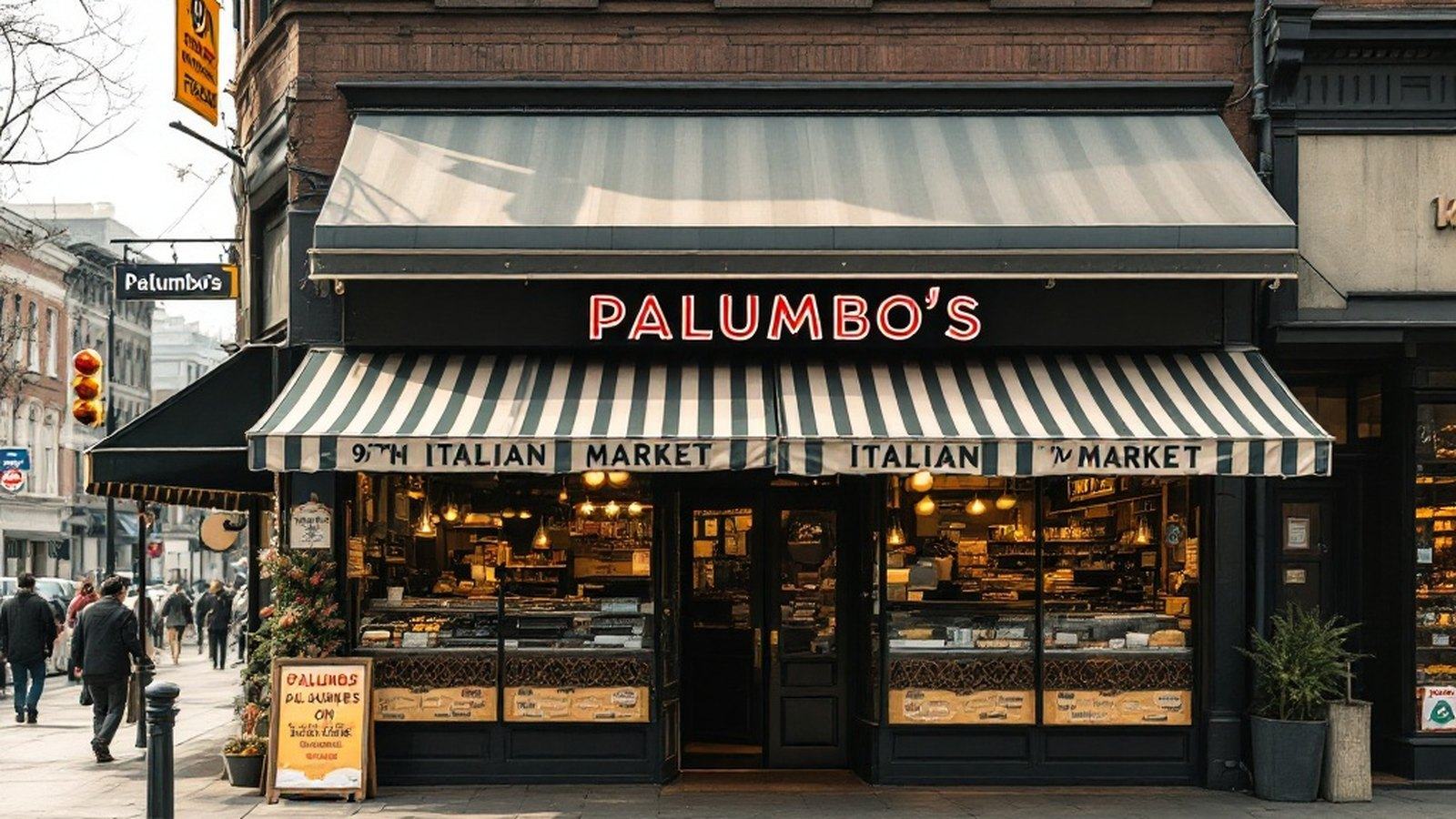
- 1880sGeorge Palumbo opens on Catharine Street; boarding-house function begins
- 1890s–1910speak arrival waves of Abruzzese and Neapolitan immigrants to South Philly
- Mid-20th centuryPalumbo's reinvented as a showroom and celebrity venue, boarding identity recedes